Sunday, June 8, 2008
THE PARLIAMENT OF RELIGIONS
INTRODUCTION
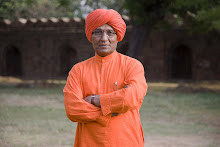
The Parliament of Religions is the brainchild of Swami Agnivesh, President of International Council of Arya Samaj, and his close friend Rev. Valson Thanpu. Swami ji has been active in the field of social service for the last forty years. His rich and varied experience, both in India as well as abroad, taught him an important lesson for tackling effectively and expeditiously the social evils in India – a concerted, united and focused religious initiative.
India is largely a poor and illiterate nation and made up of very religious societies. Therefore, involving the leaders of every faith stood out as the most effective strategy for eradicating the social evils. After the noble conception of the Parliament of Religions, its becoming a reality took months of brain-storming sessions with numerous religious leaders of all the major faiths and belief systems. India is really the most diverse nation in this department in the whole world. May be, because, India has a long and continuous history of welcoming and assimilating noble ideas from every direction. Jai Hind !
For the broadest possible consensus, all contentious issues were dropped, focusing more on agreements over a common minimum programme. As a metaphor it was like a coalition of religions for a common goal. Where political coalitions could work so well, why could not the religions coalition too succeed as well? All religions work for the betterment of humanity but each one holds its own tenets and rituals sacrosanct. So, building a consensus was a daunting task, but, the determination and perseverance of Swami Ji was rewarded with the formal inauguration of ‘the Parliament of Religions’ by Sri Sri Ravishankar, founder of ‘Art of Living Foundation’, on 5th October 2007 at the Indian Islamic Centre on Lodhi Road, in New Delhi. The inauguration, presided over by Dr. Ruth Manorama, had the active participation of many renowned religious dignitaries; Maulana Wahiduddin Khan, Rev Valsan Thampu, Chenna Basvanand Swami, Jain Muni Vivek, Fr. Dominic Emmanuel, Dr. Mahendra Singh, Goswami Sushilji Maharaj to name just a few. These gentlemen have an illustrious track record for their commitment to true godliness, religious harmony, social transformation, human dignity and empowerment.
Naturally, this august meeting of great minds, after sincere deliberations, agreed on the resolutions for the first convention of the Parliament of Religions to be held on 29th March 2008.)
Thereafter, the enthusiasts of the Parliament of religions, held a series of meetings at short intervals to make the proposed convention a historic event. A Core Committee was constituted for meeting the numerous difficulties and challenges that could arise including dedicated personnel, office space and expenses. Presently it operates from a one-roomed residence-cum-office at 7 Jantar Mantar Road with voluntary donations.
The first convention of the Parliament of Religions began on a sober note at 9 am in the Constitution Club on Rafi Marg on 29th March 2008. Many distinguished religious leaders graced the occasion and proposed seven resolutions in the first session. The resolutions were discussed threadbare in the second session amicably accepting amendments and addition of two more resolutions. In the final session, all the nine resolutions were passed unanimously. In spite of other important engagement in Delhi that day, the hall was full with enthusiastic audience. Swami Agnivesh conducted the convention with élan. The three sessions of two hours each had a half hour break for refreshments and a sumptuous lunch.
The mood of the convention was very open and optimistic. All discussions took place with a sense of urgency and sincerity, taking amendments and additions in its liberal stride. The follow up meeting of the Parliament of Religions took place on 12th April 2008 at 7, Jantar Mantar Road at 11 am to take stock of the implementation of the resolutions. Constant evaluation and correction is indispensable for a project of this magnitude that touches every male, female, child and other life forms in India.
--Anjum Rashid
rishi.anjum@gmail.com


Subscribe to:
Post Comments (Atom)
No comments:
Post a Comment